
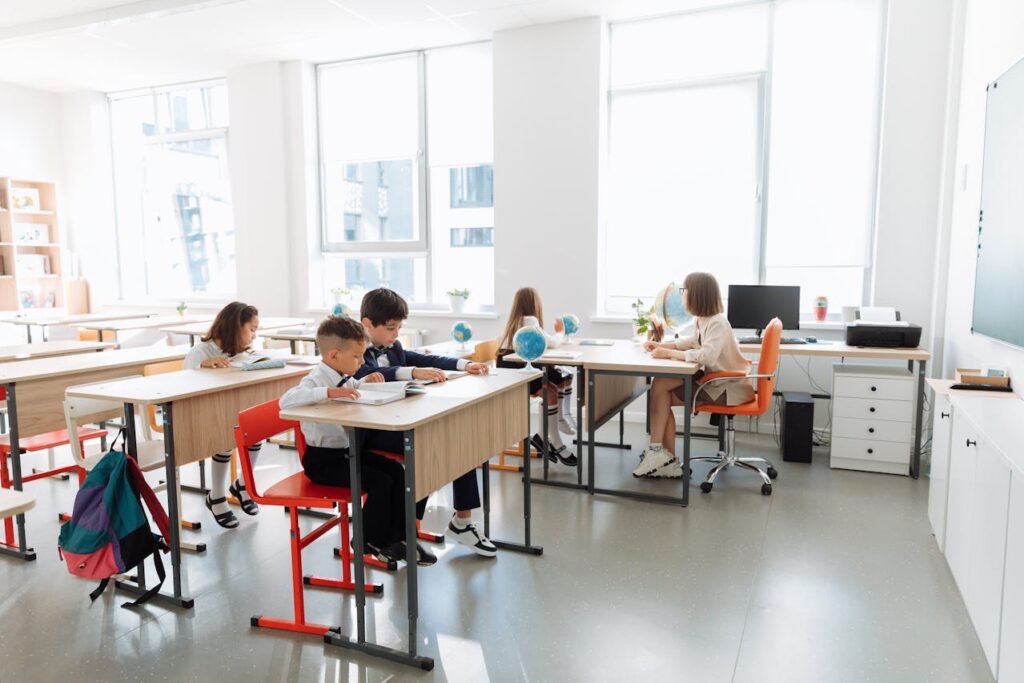
Let me ask you a few questions first:
- Do you have some students who seem unable to sit still for more than a few minutes?
- Who fidget and doodle constantly during lessons?
- Who looks like they’re about to jump out of their seats at any moment?
There’s a good chance you’ve got a bunch of hands-on, or kinesthetic, learners in your class.
Though their need to move can be disruptive, these high-energy kids thrive when you give them tactical, hands-on learning experiences.
Let me show you how!
What’s Behind Hands On Learner Anyway?
Hands-on learners, also called kinesthetic learners, absorb information best through touch, motion, and real-life interactions.
Their minds are wired for physical sensations.
Just listening to a lecture or reading a textbook is pure torture for them. For these students to truly grasp new material, they need to:
- Touch, build, or play with stuff related to the topic
- Act out concepts through role-playing or simulation
- Engage their muscles through activities like sorting cards, assembling models, or tossing balls
- Go on field trips to experience real-world examples
- Process ideas through movement, like pacing or dance
When forced to sit through passive learning, hands-on kids tend to constantly fidget. You’ll see them kneading putty, tapping pencils, stretching, and anything else to interact with their surroundings.
Challenges of Teaching Hands On Learner
While hands-on learning is ideal for kinesthetic kids, it can present some challenges:
Noise and motion – Active learning means more movement and collaboration, which can increase classroom chatter and chaos. This can sidetrack other students.
Supplies – Hands-on projects require resources like art supplies, building materials, props, etc. This stuff can get pricey.
Messiness – Working hands-on inevitably means getting messy. Cleaning up takes time.
Space – Hands-on activities need room to spread out materials and move around. Row seating is very limiting.
Time – Hands-on learning takes longer than lecturing. There’s only so much you can fit into one class period.
Behaviour – Rambunctious tactile learners may struggle to control their bodies and voices in a group.
While hands-on learning comes with logistical headaches, the payoff is worth the preparation. The key is using strategies to maintain order.
Tips for Managing an Active Class
Hands-on activities energize students and promote deeper learning. Here are some tips for organising active lessons while keeping things focused:
Set expectations – Discuss appropriate noise levels, movement, clean up, and cooperation. Teach self-monitoring.
Use space intentionally – Arrange desks/tables to allow room for projects. Set activity areas around the periphery.
Alternate teaching styles – Follow short, focused instruction with hands-on application. This allows movement in digestible bursts.
Use project bins – Keep materials organized in bin sets for specific learning activities. Only pass out what they need.
Give group roles – Assign roles like materials manager, noise monitor, cleanup captain, or taskmaster. Builds leadership skills.
Establish procedures – Train students on cleanup and transition procedures through modelling, practice, and reinforcement. Make them habitual.
Offer choices – Let students select between two or three hands-on options to meet different learning needs.
Use timers – Keep students on track by setting a timer for each task and giving warnings when the time is almost up.
Plan wisely. Switch up high- and low-motion activities. Balance hands-on activities with reading, writing, and discussion.
Check progress – Evaluate abilities and adjust support. Provide sensory tools like fidgets for those who need them.
A hands-on learner’s need for activity can be tough to handle, but it’s your job to provide an environment that nourishes their learning style while maintaining classroom function. Get creative, stay organized, set expectations, and engage their minds through hands-on experiences.
Ideas for Hands-On Learning Activities
Here are some quick, fun, and effective hands-on learning activities to engage tactile learners across subjects:
Math
- Use manipulatives like Cuisenaire rods, pattern blocks, tangrams, algebra tiles
- Play math carnival games involving counting or shapes
- Build models to demonstrate concepts like fractions or geometry
- Create story problems acted out with props
- Sort, stack, and graph physical objects for word problems
- Play math basketball with wastebasket “hoops”
Reading & Writing
- Sculpt story settings or characters with clay
- Act out vocabulary words through charades or dramatic role-play
- Toss foam balls to relay passages back and forth when reviewing
- Build vocabulary by physically sorting word cards into categories
- Create dioramas showing scenes from a story
Science
- Grow plants to observe life cycles and photosynthesis
- Mix solutions and conduct chemistry experiments
- Build DNA models using marshmallows and toothpicks
- Construct solar system models to visualize planetary orbits
- Dissect an owl pellet, flower, or other hands-on specimen
Suggested:
The Impact of Hands-On Learning in Science: Engaging Young Minds for the Future.
Social Studies
- Role-play historical events by dressing up as characters
- Cook and eat foods from cultures studied
- Assemble models of tools, technology, clothing, or artefacts
- Create maps with interactive features like pictures, strings, and pins
- Play traditional games from periods discussed in class
Takeaway!
Get creative with hands-on options across all your units and lessons. Let students collaborate, move, build, role-play, cook, assemble, mix, toss, sort—anything to actively engage their minds through their bodies.
Suggested:
Preparing Yourself to Become a School Teacher.