
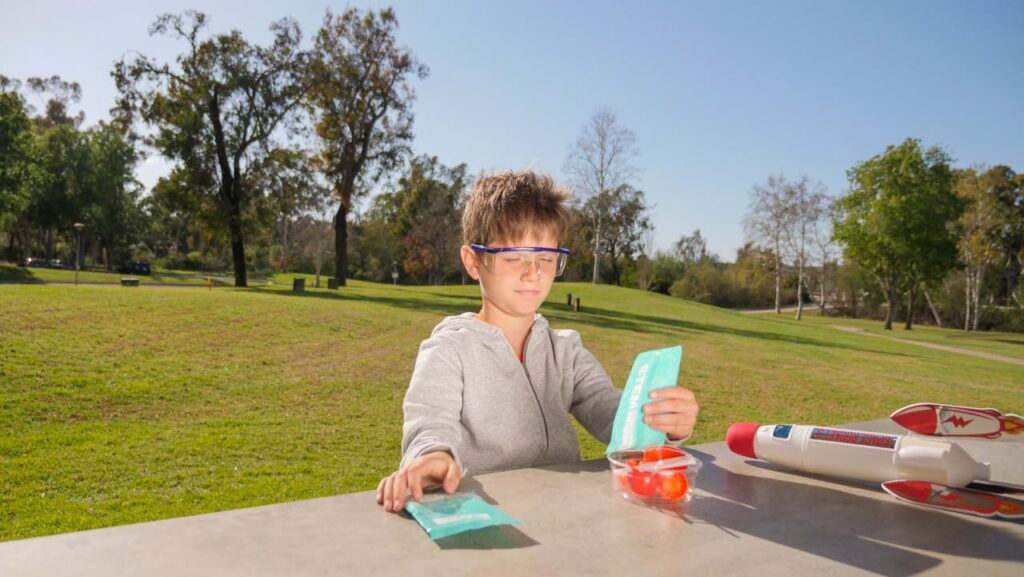
Science is everywhere. It’s in the air we breathe, food, and technology we use daily. However, how can we engage students with science? The answer is experiential learning, which has been reshaping how students engage with science.
For many years, education in science followed a traditional format in which students passively took notes as teachers explained concepts. However, the classroom dynamic has changed as hands-on learning has become more popular. This approach entails actively involving students in projects, experiments, and other activities that enable them to gain firsthand knowledge of scientific concepts. In addition to helping students grasp scientific ideas, experiential learning has a significant positive influence on developing their curiosity, critical thinking, and love of exploration.
1. Encouraging Active Participation
Students can interact directly with the material through hands-on learning. Students get to witness the reactions firsthand rather than merely listening to a teacher explain chemical reactions or looking at a textbook diagram. Hands-on education activities motivate students to actively participate, whether they are constructing a basic circuit or combining components to produce a reaction. They have a greater comprehension of scientific concepts and improve their memory of the material thanks to their active participation.
2. Making Abstract Concepts Tangible
From the principles of physics to the theory of evolution, science is full of complicated and abstract ideas. Many students may find these concepts to be very disconnected from their daily lives. This gap is filled through experiential learning. Students can observe firsthand how these abstract concepts relate to the real world when they carry out experiments or construct models. They can touch, see, and experience theoretical knowledge by building a model of the solar system or by watching plants grow under various conditions.
3. Promoting Critical Thinking and Problem-Solving
In science, hands-on learning is more than simply following instructions. Students are frequently required to solve problems, make choices, and exercise critical thought when deciding how to experiment. This develops critical problem-solving abilities. If an experiment goes awry, students must be able to quickly adapt, troubleshoot, and think creatively. In addition to science, these abilities are crucial for daily living and future employment.
4. Fostering Curiosity and Exploration
Hands-on learning directly taps into the curiosity that drives science. When students are actively involved with the content, they are more inclined to ask questions. “What causes this to occur?” “What happens if I alter this variable?” These inquiries motivate additional research and testing. The basis for future scientific learning and development is this spirit of curiosity. It pushes kids to think beyond the classroom and consider science as something they can comprehend and apply to their everyday lives.
5. Building Confidence Through Success
When an experiment is carried out effectively, a unique sense of fulfilment is experienced. This practical method helps many students become more confident in their skills. They become aware of their capacity to comprehend and practically apply scientific ideas. These minor victories, such as witnessing a plant grow from a seed or an experiment go according to plan, contribute to the development of self-worth and a feeling of achievement.
6. Creating a Love for Science
How experiential learning fosters a love of science is arguably one of its most important effects. Science transforms from a textbook topic to an engaging and significant one when students get to witness the excitement of discovery for themselves. They start to view science as a means of discovering the world rather than as a topic to learn for an exam. Future professions in science, technology, engineering, and mathematics (STEM), where creativity and curiosity are key motivators, may be influenced by this feeling of amazement.
7. Enhancing Collaboration and Communication Skills
Science experiments are rarely done alone. Collaboration and teamwork are fostered by experiential learning and are critical abilities in both academic and professional contexts. Students gain experience in effective communication, idea sharing, and listening when they collaborate in groups to plan experiments or find solutions to issues. They learn how to collaborate with others through these encounters, which is a crucial ability in today’s society.
Conclusion: The Power of Hands-On Science
Engaging students in meaningful, active learning that stimulates curiosity, critical thinking, and a love of discovery is the goal of integrating hands-on learning into science education. It is not simply about having fun or conducting experiments. Giving children hands-on learning science experiences not only helps them grasp difficult ideas but also gets them ready for a future where creativity, teamwork, and problem-solving skills will be essential.
As teachers, we need to keep promoting experiential learning. There is no denying the impact: children who experiment and explore science are more likely to retain, comprehend, and like it, which will eventually put them on the path to success in their future lives and jobs.
At Enlighten Supply Pool, we are committed to providing the materials that support this type of hands-on, engaging science education. Together, we can help make science a tangible, exciting subject that students are eager to explore.
Suggested:
The Essential Roles and Responsibilities of a Science Teacher.